
Tight Access Piling Melbourne: Planning Foundation on Restricted Sites
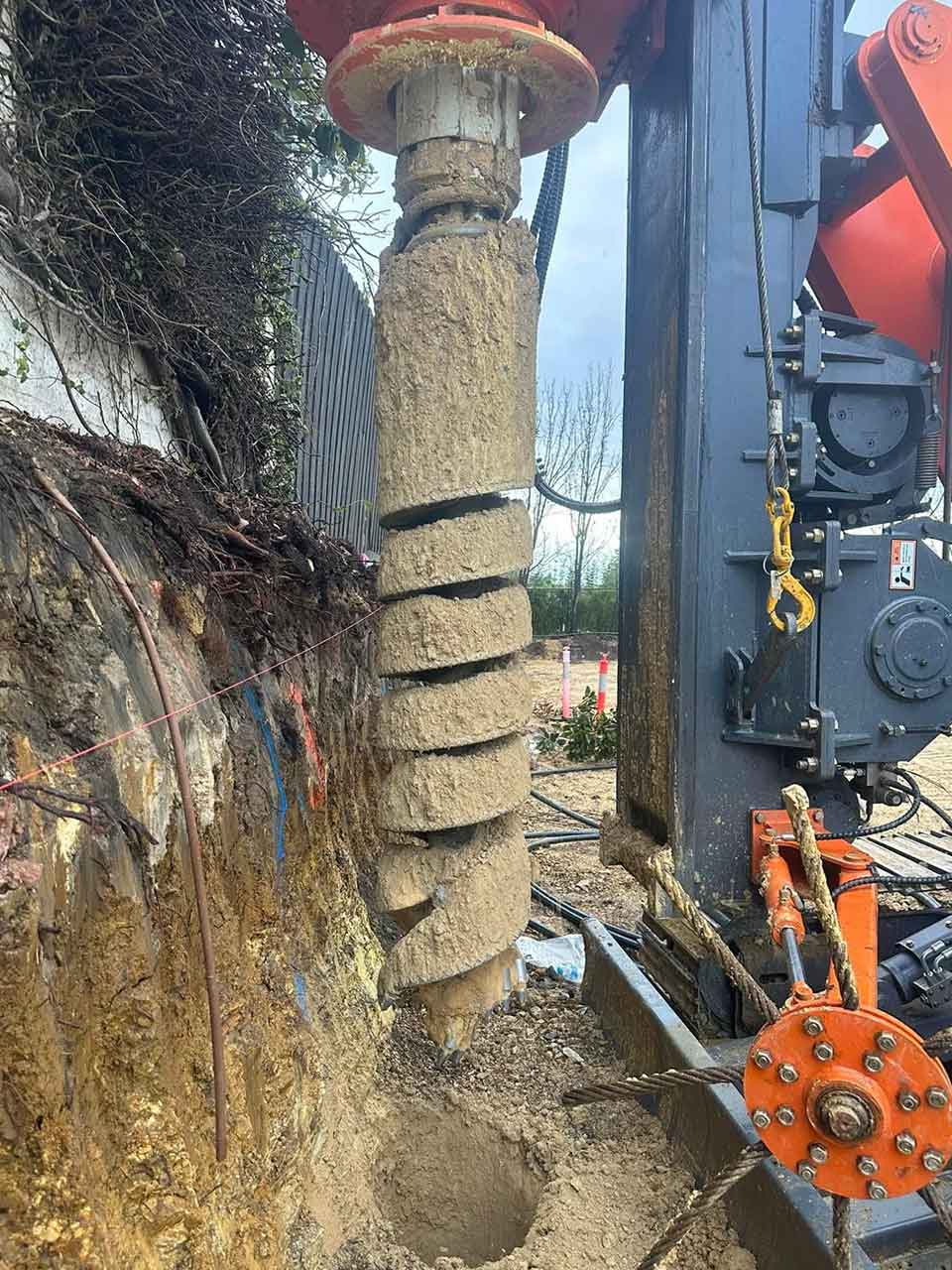
This is particularly relevant across Melbourne's established suburbs, where construction often takes place between existing homes, along narrow blocks or close to neighbouring properties. Small driveways, limited side access, boundary walls, overhead restrictions and confined working areas can all affect how piling work needs to be completed.
For this type of project, choosing a foundation system is only one part of the planning process. The available access, machinery, ground conditions and construction sequence also need to be considered before work begins.
At Superior Land Excavations, we provide piling and excavation services across Melbourne, including projects where access is limited. By combining suitable equipment, experienced operators and practical planning, we help manage the challenges that can come with restricted foundation sites.
What Is a Tight Access Construction Site?
A tight access site is generally a property where conventional excavation or piling machinery cannot easily enter or operate because of physical restrictions.
Common examples include:
- Narrow residential driveways
- Limited side access
- Rear properties with restricted entry
- Laneway accessed sites
- Blocks surrounded by existing buildings
- Construction close to neighbouring boundaries
- Low overhead clearances
- Sloping blocks
- Extensions with limited access through an existing property
An open construction site may provide plenty of room for a large piling rig to enter, position itself and move around during the project.
That is not always possible on a residential Melbourne site. Existing buildings, fences, neighbouring properties and narrow access points can significantly reduce the available working area. This makes the contractor's approach to equipment selection and site planning an important part of the project.
Why Conventional Piling Rigs May Not Suit Restricted Sites
Large piling rigs are designed for demanding foundation applications, but they need enough room to enter the property, manoeuvre and operate safely.
On a restricted site, several practical problems can arise.
These may include:
- Difficulty getting machinery through the access point
- Limited space around the required pile locations
- Existing structures restricting equipment movement
- Insufficient clearance for safe operation
- Challenges removing spoil from drilled areas
- Limited space for concrete and material deliveries
- Difficulties maintaining an efficient work sequence
Selecting equipment based only on its piling capability can therefore overlook one of the most important factors: can the machine actually work effectively within the site?
For tight access projects, the foundation method and equipment need to be considered alongside the physical characteristics of the property.
Choosing the Right Equipment for Tight Access Piling
Restricted sites often require a different approach to machinery selection. Rather than simply bringing standard equipment to the property, the contractor needs to assess the available space and determine which machinery can perform the required work.
At Superior Land Excavations, our piling and drilling equipment includes options designed to work across challenging and restricted construction environments.
Compact Excavators for Restricted Sites
Compact excavators can be useful where a larger machine cannot access the property.
Their smaller footprint can make it easier to move through narrow areas and operate around existing structures. They can also be used for excavation, preparation and foundation related works where space is limited.
However, smaller does not automatically mean suitable.
The excavator still needs enough reach, capacity, stability and operating capability for the specific job. Equipment selection should always consider the requirements of the work rather than access dimensions alone.
Excavator Mounted Drilling Equipment
Excavator mounted drilling attachments can provide greater flexibility for piling and bored pier applications on sites where a conventional rig may not be practical.
The excavator acts as the carrier for the drilling equipment, allowing the setup to be adapted to the available working area.
This approach can be particularly useful for residential projects, extensions and other construction sites where machinery needs to operate within a confined footprint.
Auger Systems for Bored Piers
Bored piers are drilled foundation elements designed to transfer structural loads into appropriate ground conditions.
Depending on the project, auger drilling systems can be used with suitable machinery to install bored piers where access is restricted.
The drilling equipment needs to be selected according to factors such as the required pier diameter, drilling depth, soil conditions and engineering specifications.
Hydraulic Installation for Screw Piles
Screw piles can also be considered for some restricted access projects.
Hydraulic drive systems allow screw piles to be installed using relatively compact equipment. Depending on the project requirements, this can also reduce the excavation and spoil associated with some drilled foundation methods.
However, screw piles should not be selected simply because they are convenient for a tight site.
The appropriate foundation system still needs to meet the engineering requirements of the building. Structural loads, ground conditions, pile capacity and the engineer's design all need to be considered.
Drilling Through Hard Ground and Rock
Limited access does not necessarily mean simple ground conditions.
Melbourne sites can contain reactive clay, imported fill, dense soils and rock. These conditions can affect how efficiently drilling and excavation work can be completed.
The contractor therefore needs to consider the likely ground conditions when selecting equipment and attachments. Having suitable machinery available can help address harder ground while still working within the physical limitations of the site.
Compact Machinery Alone Does Not Solve Tight Access Challenges
It can be tempting to think that the answer to a restricted site is simply using smaller machinery.
In practice, successful tight access piling requires much more planning than that.
Before work starts, the contractor needs to consider the route machinery will take into the property, the location of each pile, existing structures, available working space, spoil removal and the order in which the work needs to be completed.
Once piling begins, accurate positioning and careful operation remain important, particularly when working close to buildings, boundaries and other structures.
The equipment needs to fit the site, but the overall work method needs to fit the construction project.
This is especially important for builders and developers because piling is often connected to several stages that follow. Delays during foundation works can affect excavation, structural construction and subsequent trades.
Clear communication and practical planning can therefore make a significant difference to the overall construction program.
Screw Piling or Bored Piers: Which Is Better for Tight Access?
Screw piles and bored piers are two foundation options that may be considered for restricted access projects.
Screw piling can work well on certain sites where the engineering design permits its use. Installation can be relatively efficient, and the process can generate less excavation and spoil than some drilled foundation systems.
Bored piers may be more appropriate when the project requires drilled foundation elements, particular pier dimensions or greater foundation depths.
There is no single foundation method that is suitable for every tight access project.
The decision needs to take into account:
- Ground conditions
- Structural loads
- Required foundation capacity
- Available site access
- Pile dimensions and depth
- Engineering requirements
- Machinery limitations
- Construction sequencing
The fastest looking option is not necessarily the most appropriate one. The foundation system needs to meet the project's structural and site requirements first.
Melbourne Projects That Can Require Tight Access Piling
Restricted access conditions can occur across many different types of construction projects in Melbourne.
Rear Home Extensions
Building behind an existing home can leave very little room for conventional machinery, particularly when foundations need to be installed close to the existing structure.
Narrow Block Knockdown Rebuilds
Established Melbourne suburbs often contain properties with narrow side access. The available entry width and block layout can have a direct impact on how foundation equipment reaches the work area.
Townhouse Construction
Townhouse developments can involve several dwellings being constructed on relatively compact blocks. Access can become even more challenging when neighbouring properties remain occupied.
Boundary Developments
Building close to a property boundary requires careful consideration of equipment positioning, working clearances and the surrounding structures.
Sloping Blocks
Changes in elevation can make machinery access and positioning more difficult. Sloping sites can also introduce additional considerations for excavation and foundation works.
Commercial and Industrial Sites
Restricted access is not limited to residential construction. Commercial and industrial projects can also have machinery constraints caused by existing buildings, loading areas, operating facilities or limited entry points.
Melbourne Ground Conditions Need to Be Considered
Access is one of several factors that can influence a piling project.
Ground conditions can differ significantly from one Melbourne property to another. Sites may contain reactive clay, fill, dense soils or rock, each of which can affect drilling and excavation requirements.
This means a piling method that has worked successfully on one property may not necessarily be the appropriate solution elsewhere.
Geotechnical information and engineering documentation should establish the foundation requirements. The piling contractor then needs to determine how those requirements can be practically delivered within the available site conditions.
For restricted access projects, the relationship between engineering, ground conditions, equipment and site planning becomes particularly important.
Why Choose Superior Land Excavations for Tight Access Piling Melbourne?
If a project involves narrow access, limited working space or challenging ground conditions, it is worth considering the piling requirements well before machinery is scheduled to arrive.
Superior Land Excavations provides piling and excavation services across Melbourne and can assess the practical requirements of restricted sites to help establish an appropriate approach.
Our focus includes:
- Experienced operators
- Suitable piling and excavation machinery
- Restricted access capability
- Practical project planning
- Bored pier installation
- Screw piling solutions
- Knowledge of Melbourne ground conditions
- Careful equipment selection
- Communication with builders and developers
- Safe and accurate foundation work
For projects where access is limited, early planning can help identify potential machinery, sequencing and site challenges before they become construction delays.
Contact Superior Land Excavations to discuss your tight access piling requirements in Melbourne and request a quote.
Disclaimer
This article is provided free of charge for public information. We do not guarantee, and accept no legal liability for, the accuracy, reliability, currency, or completeness of the content or any linked material. Users should apply their own judgment and verify the material’s relevance to their needs. This article is a general summary and not a substitute for legal or professional advice. Users should seek appropriate advice for their circumstances. Any third-party views expressed do not necessarily reflect ours or imply endorsement.