
When Your Business Outgrows Its Website: What Should Come Next?
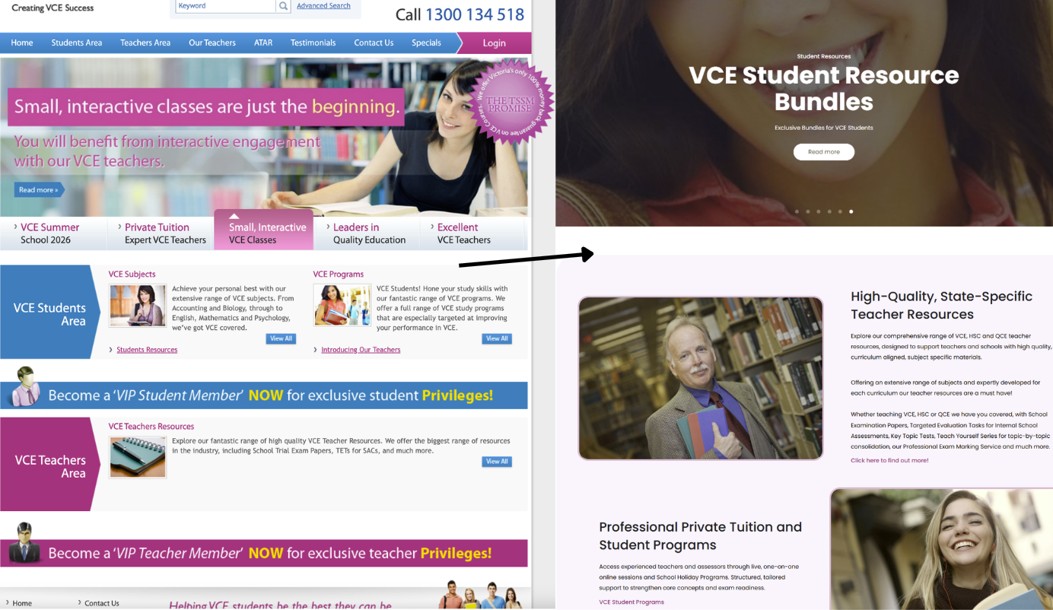
A growing business needs a website that can keep pace. As your services, customers, branding and marketing evolve, the website that once worked perfectly can eventually become restrictive, difficult to manage or simply unsuitable for the direction the company is taking.
A website can still look modern and professional while creating limitations behind the scenes.
Perhaps adding a new service requires significant development, maybe your marketing team cannot make simple content changes without assistance. Your SEO strategy may be restricted by the platform, or the website may struggle to deliver the performance and functionality your customers now expect.
At this stage, businesses often face a bigger decision than simply refreshing the design:
Is the existing website worth improving, or would the business be better served by moving to a platform built for its next stage of growth?
For an established or expanding company, the answer should not be based purely on appearance. The next website needs to provide the flexibility, performance, functionality and technical foundations required to support the business over the long term.
How Do You Know When Your Business Has Outgrown Its Website?
There is no specific age at which a website becomes outdated.
A website can be relatively new and still fail to meet the changing requirements of a business. The issue is usually the gap between what the company needs and what its existing platform can realistically provide.
Common signs include:
- The CMS has become difficult or frustrating to use
- New functionality requires extensive development
- The design no longer represents the brand
- New services or markets are difficult to add
- Mobile performance is no longer competitive
- The platform limits SEO improvements
- Marketing staff cannot efficiently manage content
- The website relies heavily on plugins or third party tools
- Increasing content or traffic creates scalability concerns
- Different customer groups require different journeys
Imagine a business that originally served a relatively narrow customer base but has since expanded into corporate, regional and specialist markets. The website now needs to speak clearly to several audiences while maintaining a consistent brand and straightforward user experience.
That is more than a design issue, it is a sign that the website needs to support a more complex business.
Build Your Next Website for Future Growth
One common mistake when replacing a website is designing it entirely around the company's current position.
A new website should also account for where the business intends to go.
If the company plans to introduce new services, enter additional markets, target larger organisations or expand into new locations, the website should have enough flexibility to accommodate those changes.
Start by considering the bigger picture.
Who Needs to Use the Website?
Different audiences may have different priorities.
Corporate decision makers may need detailed information, case studies and evidence of expertise, while consumers may be looking for a simpler path to products, services or enquiries.
Regional customers, industry specific audiences, suppliers and other stakeholders can also require different information.
A scalable website should allow these journeys to be structured clearly without making the overall experience confusing.
What Does Your Brand Need to Communicate?
As businesses mature, their websites often need to communicate more than basic information.
A stronger digital presence may require professional photography, video, case studies, animation, detailed service information or more sophisticated visual presentation.
The website should provide enough flexibility to accommodate these elements while maintaining a consistent brand identity.
What Functionality Might You Need Later?
Future requirements could include:
- Additional service pages
- New locations
- Online calculators
- Booking functionality
- Customer portals
- Business integrations
- Additional websites or divisions
- More advanced content management
Building with these possibilities in mind can reduce the risk of needing another major rebuild in just a few years.
Website Design Needs to Scale Too
Scalability is often discussed in terms of hosting, server capacity and website traffic, but the design itself also needs room to grow.
A website may look excellent when it contains five or ten pages. The challenge becomes more obvious when the business eventually needs 30, 50 or hundreds of pages.
- Can new services use the existing design system?
- Can additional locations be introduced without creating inconsistent layouts?
- Can industry specific pages have their own structure while still feeling like part of the same website?
- Can new visual elements be introduced without making older pages look disconnected?
These questions become particularly important for established businesses undergoing rebranding or repositioning.
A growing website may need to combine strong imagery, video, animation, distinctive typography and different visual layouts. The design system needs enough flexibility to accommodate this growth without every page looking identical.
Your CMS Should Make Growth Easier
The front end of a website can look excellent while the CMS behind it becomes increasingly difficult to manage.
If every small change requires developer involvement, the website can become a bottleneck for your marketing team.
A suitable CMS should give internal staff control over everyday content updates while still giving developers the ability to implement more advanced functionality.
When evaluating your next platform, consider:
- How quickly can new pages be created?
- Can staff update content without technical knowledge?
- Can different sections be managed efficiently?
- Can new functionality be introduced when required?
- Can the platform support multiple websites or divisions?
- Can it connect with future systems and integrations?
- How dependent is it on plugins and third party extensions?
The CMS should work around the needs of the business rather than forcing the business to operate within the limitations of the platform.
Don't Choose a New Website Based on Design Alone
Design is obviously important when replacing a website, but appearance should not be the only consideration.
A website can look impressive and still perform poorly, create SEO limitations or become difficult to maintain.
The technical foundations deserve just as much attention.
Website Performance
Large images, unnecessary scripts, inefficient code, excessive plugins and poor hosting can all affect performance.
A new website should be developed with performance in mind rather than trying to resolve speed problems after launch.
Search Engine Optimisation
SEO should be considered during development, not added once the website is finished.
Site structure, page hierarchy, internal linking, technical performance and content management all influence how effectively a website can support an SEO strategy.
If a business is investing in organic search, the website needs to provide the technical foundation required to maximise that investment.
Mobile Experience
Your website needs to work effectively across smartphones, tablets, laptops and desktop computers.
A design that looks excellent on a large monitor is not enough. Mobile visitors may represent a significant proportion of your potential customers, making responsive design and mobile usability essential.
Security and Ongoing Maintenance
As a business becomes more dependent on its website, maintaining a secure and reliable platform becomes increasingly important.
Websites that rely heavily on outdated plugins, unsupported components or fragmented third party systems can create unnecessary maintenance and security challenges.
A scalable platform should make ongoing management more straightforward as the business evolves.
Why Core Web Vitals Matter
Website performance involves more than simply reducing loading times.
Google's Core Web Vitals provide several important measures of real world user experience.
These include:
Largest Contentful Paint (LCP): Measures how quickly the main content on a page becomes visible.
Interaction to Next Paint (INP): Measures how responsive a website feels when a visitor interacts with it.
Cumulative Layout Shift (CLS): Measures visual stability and identifies unexpected movement while a page loads.
Other technical factors, including mobile usability, HTTPS, responsive design and overall page experience, also contribute to the quality of a website.
For businesses competing for valuable search positions, these foundations are important.
A slow or unstable website can frustrate visitors, reduce the effectiveness of the user journey and limit the value generated from an SEO campaign.
When Custom Web Development Makes Sense
For some businesses, an established off the shelf platform provides everything they need.
For others, the limitations become increasingly difficult to work around as the organisation grows.
This is where custom web development can provide an alternative. Rather than starting with a platform and then trying to fit the business into its available features, custom development allows the website to be planned around the company's requirements, customer journeys and longer term objectives.
At IT BOOST Australia, our in house custom web engine gives us greater control over how websites are developed, managed and structured.
This allows us to create websites around specific business requirements, from sophisticated design and custom functionality through to SEO, performance and flexible content management.
The goal is not to make a website unnecessarily complicated, it is to use technology that is appropriate for the organisation and provides enough flexibility to support its future direction.
Your Next Website Should Support the Business
If your existing website has become difficult to manage, no longer represents your brand or is preventing the business from implementing new ideas, another simple redesign may not solve the underlying problem.
The more important question is what the business actually needs from its next digital platform.
At IT BOOST Australia, we approach website development from a business and technical perspective, bringing together custom web design, development, SEO and performance to create websites built around both current requirements and future growth.
Your business will continue to change, and your website should be built with enough flexibility to change with it.